Monday, June 15, 2015

How Often Do You Eat?

The simple rule for millennia was eat to survive, but our modern lifestyle seems to have it flipped.
Now, with obesity rates on the rise and affecting more than one-third of Americans, according to the Centers for Disease Control and Prevention, it seems humans survive so they can eat.
What we should eat has long been debated as diet recommendations have changed over the decades from fat free to high protein to low carb. As has the simplest of factorshow much we should eatwith calories occupying the central role. But what aboutwhen? If your goal is weight loss, should you eat throughout the day or is there value in reserving meal times for certain segments of the day? It turns out that answer is personal.
“The recommendations for eating patterns (including the number of times you eat throughout the day as well as when you eat) needs to be approached on an individual basis taking individual goals into consideration,” says Jessica Bachman, Ph.D. and professor in the Department of Exercise Science at the University of Scranton.
One long-running, popular approach to promote general health and weight maintenance has been to spread calories throughout the day in the form of several small meals. In doing so, the concept is that you’ll feel less hungry at any particular time and, therefore, less likely to consume an excess of calories during meals.
There is some data to support this. Bachman led a study that appeared in the Journal of the Academy of Nutrition and Dietetics, in which people who were of normal weight or those who were maintaining their weight reported eating more often than individuals who were obese.
Another study, this one from the University of Murcia in Spain, found timing may be a factor as well. Over a 20-week test period, those who consumed the majority of their calories later in the day lost weight at a slower rate weight than those who were early eaters. Diet, energy expenditure, and sleep were consistent between both groups, but the early eaters tended to eat breakfast more often than late eaters.
“The hypothesis is that if you eat small meals and snacks throughout the day, you never allow yourself to get overly hungry,” says Bachman. “We know that people tend to eat more when they are very hungry, so by avoiding this greater level of hunger, maybe people can limit overeating and therefore control their calorie intake and, ultimately, weight.”
Bachman followed up her original study with a six-month weight-loss intervention with two groups of 25 overweight and obese adults. One group was told to eat all of their calories in three meals a day and the other group was told to eat meals and snacks at 2-3 hour intervals throughout the day. Both groups lost weight. But the group that ate three times a day ate fewer calories and lost more. “What we found was contrary to observational research. It appeared that eating less often, and therefore being exposed to fewer opportunities to overeat, may help people with losing weight.”
However, this doesn’t necessarily hold true for weight loss programs that offer a set amount of calories and predetermined meal sizes.
study at the Salk Institute in La Jolla chose to look at time-restricted eating instead of focusing on specific types of diets or the number of meals. Their hypothesis was that how efficiently the body  handles calories is more closely related to the circadian rhythms of active and rest periods than the food consumed. The researchers at Salk, led by Associate Professor Satchidananda Panda, tested 400 mice. The mice were given a range of diets, from high fat to just sucrose or fructose, and found those that were restricted to an 8-12 hour feeding window lost weight and were healthier than those allowed food all day.
Even the mice that had 24-hour access to a high-fat diet, and became obese, lost weight once their diet was confined to the feeding time frame. This held true for diets high in fat or sugar, even if they consumed the same number of calories as the all-day eaters. Those fed in the 9-12 hour window were leaner. “It highlights the temporal aspect of feeding more than the calorie content and shows it is important to eat during your active phase which is when your body is tuned to energy expenditure and not energy storage,” says Circadian Biology Ph.D. Amandine Chaix, who participated in the study and felt these results could have further positive effects, when tested on humans.
“One set of the population is already obese,” Chaix said. “So already being obese and switching to a time-restricted feeding, you can lose weight? That was really powerful.”
Bachman said research is moving in the direction of meal timing and may have further benefits for the aging population in addition to those overweight, especially as it relates to the consumption of protein.
“This has potential important applications for older adults who are commonly plagued with muscle loss as they age but, also, for anyone trying to lose weight,” Bachman said. “With weight loss, you are losing not only fat but also lean muscle mass and this way of eating may help prevent some of the loss in muscle mass.”
But all of this may come down to a numbers gamecalories. Baschman says, “If someone is trying to lose weight, the individual needs to create a calorie deficit, ideally by eating fewer calories and exercising more.”
And that science is simple.

Friday, May 22, 2015

ROAD TRIP!


So I spent the week traveling to see my grandson and I though this would be the perfect share to help others over the holiday weekend try to eat healthy and stay away from the fast food rollercoaster! 


15 Great Road Trip Foods Under 200 Calories!


15 Great Road Trip Foods Under 200 Calories
The car is packed, the kids are happily occupied in the backseat, and you’re ready to hit the road. But, when stomachs start rumbling, what’s the plan? To stop you from making a pit stop at a greasy spoon or swinging through a drive-thru, we’ve pulled together a list of 15 road trip foods that will keep those hunger pangs at bay—and your car not full of detritus. And, most of them can be taken on a plane as well!
1. Fruit
Fruit’s fiber and high water content will help keep you full and hydrated as you travel. But, unless you want a messy car, it’s best that you either choose fruit that doesn’t have a stem, a pit, or an outside covering—namely, blueberries, figs, and grapes—or prepare fruit ahead of time and place it into Tupperware containers. Strawberries, banana slices, peaches, and nectarines are great for this.
Calories per serving: 85–105

2. Kale Krunch
I discovered this when I was doing P90X earlier this year. They’re low in calories, high in vitamin A, and totally addictive. Plus, they’re flavored with ingredients like organic olive oil and organic chia seeds. They are a little on the expensive side though, so if you want to make your own, make these Kale Chips, chop them into bite-sized morsels, and pop them in a Tupperware or Ziploc bag.
Calories per serving: 110

3. A Better Nut Butter and Jelly
The trouble with most sandwiches is that they require a cooler…unless you like eating warm chicken salad. Peanut (or any nut, frankly) butter and jelly is one that doesn’t. Make it with whole-grain bread (my personal favorite is Ezekiel 4:9), an all-natural nut butter, and all-natural fruit spread like St. Dalfour to up the health factor.
Calories per 1/2 sandwich: 150 (varies depending on ingredients)

4. Shakeology Packets
Want to take your Shakeology on the road? Just mix a single-serving Shakeology packet (available in Chocolate, Vanilla, Greenberry, Chocolate Vegan, and Tropical Strawberry) with water and shake!
Calories per serving: 160–170

5. Eggs
You might find the idea of taking eggs with you on the road a little odd, but hard-boiled eggs are great for a quick power-up. Plus, they’re loaded with B vitamins, which may help keep tempers cool on long trips.
Calories per serving: 78

6. Homemade Energy Bars
The bulk of prepackaged bars sold at gas stations or convenience stores are loaded with sugar, preservatives, and empty calories. These homemade bars can be made in minutes and contain only good-for-you ingredients like fruit and nuts.
Calories per serving: 124
7. Nuts
Nuts are highly caloric, but they’re also high in healthy omega-3 fats and travel well. Choose raw, unsalted nuts like almonds or walnuts that don’t require you to dispose of a shell.
Calories per serving: 130–180

8. Spiced Nuts
Deepen the flavor of nuts by roasting them with spices. This recipe that combines cinnamon, cayenne, and cumin with a touch of honey will keep you away from the store-bought trail mix.
Calories per serving: 120

9. Baby Carrots
Maybe we’re weird, but we think baby carrots are fun to eat, and they don’t make a mess! They’re sweet on their own, or you can combine them with hummus for a yummy, crunchy treat.
Calories per serving: 30

10. Split Pea Crisps
Peas are really good for you thanks to their fiber and vitamins A and C. But, good luck getting your kids to eat them on a road trip. Unless…you disguise them as a crunchy snack. These split pea crisps from Whole Living combine peas with just a touch of olive oil and salt.
Calories per serving: 55

11. Other Vegetables
It’s a classic for a reason. Slice up your favorite veggies—snap peas, cucumbers, cherry tomatoes, and celery all travel well—and pop them into a sealable container. Persian cucumbers are also a yummy single-serving snack.
Calories per serving: Less than 20

12. Dried Fruit
On day 2 of the road trip, when you’ve run out of regular fruit, try dried fruit. It’s higher in calories by volume than fresh fruit, so just be mindful of how much you eat and look for options without sulfites, but it’s better for you than a candy bar. Or a Fruit Roll-Up.
Calories per serving: About 150

13. PopChips
This is probably the least healthy option on this list since they’re made with potato flour and not whole potatoes, but you could do a lot worse. Plus, they’re a Tony Horton–approved road trip snack. Original PopChips contain just potatoes, salt, a touch of rice flour, and oil, so you can feel like you’re snacking on chips without loading your body up with who knows what.
Calories per serving: 120

14. Seeds
Though high in calories, seeds are high in heart-healthy magnesium and protein. Plus, cracking pumpkin or sunflower seeds open will keep your hands (if you’re not driving!) and your mind busy while you’re on the road. They can be high in sodium, so just take a look at the sodium levels or consider roasting your own.
Calories per 1/4 cup: About 160

14. Spicy Baked Chickpeas
Chickpeas, garbanzo beans, little weird things that come in a can…whatever you call them, these little nuggets of goodness are high in fiber and will help keep you full. Try this road-friendly recipe for them.
(7 servings, 1/4 cup each)
Ingredients:
1 15-oz. can garbanzo beans(chickpeas)
1 tsp. olive oil
1 pinch cayenne pepper
1/2 tsp. garlic powder
1/2 tsp. ground cumin
1/2 tsp. sea salt
Preparation:
1. Preheat oven to 400° F
2. Rinse canned garbanzo beans and let them drain well in a colander for several minutes.
3. Toss the beans in a small bowl with olive oil, cayenne pepper, garlic powder, ground cumin, and sea salt
4. Bake on a foil-lined sheet for 40-45 minutes, stirring every 10 minutes.
Calories: 187
 There are more great articles like this one that you have free access to with your Team Beachbody Account. Don't have one??? Then message me and I will get you started right away! 


Tuesday, April 14, 2015

Lactic Acid

Here is a great article on Lactate that I thought would be helpful to those that do a lot of running.  Information courtesy of Jeff Gaudette.

Ditch the 1970’s physiology. Lactate is your friend

Lactate, or lactic acid as it is commonly known, gets a bad rap thanks to some faulty science from the 1970′s.

While an excess accumulation of lactate contributes to why runners slow down at the end of races, lactic acid itself isn’t responsible for the muscle fatigue that causes you to do the skeleton dance at the end of a race.

In fact, lactate is actually a source of energy.

Hydrogen ions are the real culprit

The cause of your muscle fatigue is actually the result of a build-up of hydrogen ions.  

For each lactate molecule produced by the body, one hydrogen ion is also formed. Hydrogen ions lower the blood pH and make the muscles acidic. This acidity irritates muscle nerve endings and causes that pain, heaviness, and burning mistakenly attributed to lactic acid.

How lactate really works

As you probably already know, your body breaks down glucose for energy, and a byproduct of this process is lactate.

During easy running, your body reconverts and recycles this lactic acid back into energy (through the Cori Cycle) and carries away hydrogen ions with it.

Therefore, the production of lactate, and the clearance of hydrogen, will remain relatively constant while running at an easy aerobic pace, which doesn’t require a huge demand for energy.

As you continue to run faster and demand more energy, the production of lactic acid will slowly increase. At some point, whether it be too fast a pace or holding a steady pace for too long, the production of lactic acid will soar and your body will no longer be able to convert lactate back into energy.

At this point, lactate can’t grab its hydrogen ion to reduce the concentration of hydrogen in the muscle cell. And, as we learned previously, hydrogen is what causes the muscles to seize up.

How this knowledge changes your approach to lactate threshold training

Now that we understand how lactate really works in the body, and have discovered the true culprit of our muscle fatigue, how does that change our approach to training?

Recent research indicates that the goal of endurance training shouldn’t be to reduce the production of lactic acid but to improve the ability to clear lactate from the blood.

Simply speaking, we shift from the idea of increasing our tolerance for lactate production to the idea of increasing how efficiently our body utilizes lactate as an energy source.

The faster we can train our body to reconvert lactate back into energy in the liver, the longer and faster we can run at a given pace.

Therefore, the goal of your lactate threshold training shouldn’t be on how to reduce lactic acid production, but train your body to use it efficiently.  

While this shift in thinking is slight, it radically changes how you approach your lactate threshold workouts.

Lactate clearance workouts

Of course, traditional tempo runs, tempo intervals, and cruise intervals help increase your body’s ability to clear or reconvert lactate. However, you can implement special lactate clearance workouts into your training to more specifically target this niche of your training.

My favorite lactate clearance workout is what I call the lactate clearance tempo.

Lactate clearance tempo

The purpose of the lactate clearance tempo is to spike lactic acid production by starting with faster miles and then train your body to efficiently process the lactate while still running at a reasonable pace (CURRENT marathon pace).

This will help make you more efficient at reconverting lactate to energy on race day.

The lactate clearance workout is a great tempo effort for runners training for the 5k or 10k. It allows you to run at or near goal pace for part of the workout and still get the benefit of a threshold run.

The objective is to run the first mile or two of a tempo run at about CURRENT 10k fitness pace and then back off the last mile or two miles at current half marathon or marathon fitness pace.

Here’s how the workout might look for a 3:30 marathoner:

2 mile w/u, 2 x 3 miles (first 2 miles at 7:20 last mile at 7:50 pace) w/3 min rest, 1 mile c/d

To increase the total length of the workout, you can break the tempo into two or three 3 to 4 mile sessions. This will allow you to keep your volume high without going overboard with the workout.

Notes
  • This workout serves as good practice for those runners who can’t control their pace early in a race. This will help you “recover” if you go out too fast.

  • Doing more than 4 miles in one “set” is difficult. We keep the sets to 3 or 4 miles.

  • Remember, the “slow” mile is designed to teach your body how to become efficient at processing lactate. Running faster just because you can reduces the effectiveness. Faster is not always better.
We’ll implement these workouts in your schedule to spice things up and improve your lactate clearance rate.

Try them out yourself. I guarantee it will be a great training stimulus and a neat way to "feel" lactate clearing.

Wednesday, April 1, 2015

Supernutrients: Everything you Need to Know

Shakeology is packed with supernutrients. Now we know you are probably like, “say whaaaaat, what’s a supernutrient?” Well, you’re not alone. Take a look:


Okay, that video may have only left you more confused. Allow us to explain. What is a supernutrient? Supernutrients are powerful nutritional components within superfoods that provide vital health benefits. Basically, they are the parts of superfoods that actually cause the foods to be “super.” For example, a bilberry is a superfood. One of the components of bilberries (which are an ingredient of Shakeology) that make them “super” is anthocyanins, which help support eye health. Therefore, anthocyanins are one of bilberry’ssupernutrients. Got it? Great!Shakeology has a smorgasbord of supernutrients in its ingredients, which is why you really do get your daily dose of dense nutrition with each delicious glass. Throughout the month we will be going into detail about which foods have which supernutrients, but here are a few examples now to give you an idea. Supernutrient: AMINO ACIDS What it does: Are the building blocks of proteins which help build and maintain muscle health Which ingredients in Shakeology have this: Whey, Pea, Chia, Quinoa, Amaranth, Flax, Sacha Inchi; Vegan Protein blend also includes Oat and Rice Proteins Supernutrient: PUNICALAGIN What it does: May help benefit the heart and the health of blood vessels Which ingredients in Shakeology have this: Pomegranate Supernutrient: FLAVONOIDS What it does: Protects the body form oxidative stress Which ingredients in Shakeology have this: Spinach and Kale Supernutrient: SAPONINS What it does: May help promote nutrient absorption Which ingredients in Shakeology have this: Astragalus, Ashwagandha, Schisandra, Ginkgo, Tulsi [Holy Basil] Supernutrient: TANNINS What it does: May help support cardiovascular health Which ingredients in Shakeology have this: Blueberries, Bilberries, Yacon, Pomegranate These are only SOME of the supernutrients in Shakeology that you consume every time you blend up a yummy shake. Not only is Shakeology a treat to your taste buds, but it is also a great way to treat your body to the nutrition it deserves. Are you heading to the kitchen right now to make a shake? We thought so. We put Shakelogy’s supernutrients to the test this month. Bilberry and Maitake battled foods masquerading as healthy, ahem sugary smoothie and blueberry muffin, and Yacon Root, Pomegranate, Ginkgo, and Moringa took on traditional unhealthy staples – Cheeseburger and Donut. The result of the first two battles are in. Watch below to find out!


Most people are nutrient deficient and just one serving of  Shakeology has enough nutrients to satisfy the recommended daily allowance. Not to mention the energy, reduced cravings and the regularity that goes along with it. For more information and your free account click the link below.
http://www.teambeachbody.com/shop/-/shopping?referringRepId=182856


Friday, March 20, 2015

Beachbody On Demand New Feature!


New Feature Added to Beachbody on Demand


Beachbody-On-Demand_700x350B_mseogx
With Beachbody on Demand you get unlimited access to stream hundreds of world-class Beachbody workout programs (valued at over $1500)anytime, anywhere.
And now, if you’ve previously purchased the DVDs for FOCUS T2521 Day Fix, or 21 Day Fix EXTREME, you can stream those workouts wherever you are! You’ll also have digital access to all printed materials, such as nutrition guides, calendars, and quick start guides.
Requirements to stream FOCUS T25, 21 Day Fix, or 21 Day Fix EXTREME:
  • You have previously purchased one of the above programs through Beachbody, Team Beachbody, or Amazon.
  • You are currently a paid Premium Team Beachbody Club Member. Not a member? Sign up here. If you already have a free Team Beachbody account, make sure to log in to your account before signing up.
The workouts available for you to stream are based on which program kit you purchased. For example, if you bought the FOCUS T25 Base Kit, all of the ALPHA and BETA series workouts will be available in your Purchased Programs library. To gain access to the GAMMA workouts, you would need to have purchased those, either within a Deluxe Kit or as a standalone purchase.
People who buy any of the above workout programs on DVD in the future will also get streaming access to those workouts. Find out more about Beachbody on Demand here, and get instructions for streaming workouts on your TV.  As your FREE Coach I can get you started right away! Now for just 140.00 You can have your first month of Shakeology and 3 Months of on demand programs. After that pay only 38.95 quarterly for your on demand and of course your recurring Shakeology! Message me TODAY!!

Thursday, March 19, 2015

PB&J Shakeology


PB and J Shakeology


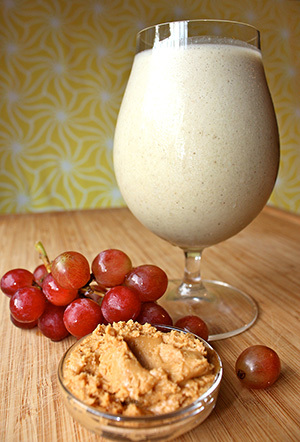
ShakeologyThis shake was inspired by the classic sandwich. Make your Shakeology taste like a PB and J with peanut butter and fresh grapes!

Total Time: 5 min.
Prep Time: 5 min.
Cooking Time: None
Yield: 1 serving
Ingredients:
½ cup water
½ cup unsweetened almond milk
1 scoop Vanilla Shakeology
¼ cup red grapes
2 tsp. all-natural peanut butter
1 cup ice
Preparation:
1. Place water, almond milk, Shakeology, grapes, peanut butter, and ice in blender; cover. Blend until smooth.
Message me for more great recipes and your free team beachbody account today! 

Sunday, March 15, 2015

Organizing Your Kitchen For Weight Loss

Man cutting fruits and vegetables for dinner organize kitchen for weight loss


How you set up your kitchen—from décor to utensils to where you keep treats—can make a substantial difference when it comes to losing weight. There’s a reason Google “strategically designed” their campus cafeteria using behavioral economics to “make it easy for people to make healthy choices.”
You don’t need an entire kitchen overhaul to make a difference. Many revamps take just a minute. Here are 9 simple ways to start:

Make It Easy to Reach for Healthy Foods
We tend to eat more of what’s staring us in the face—and a container of M&Ms on your counter will just wear down your willpower until you give in and wolf down a handful. Make healthy snacks like nuts, pre-cut veggies, fruit, and Greek yogurt easy to grab when you’re hungry.
Hide the Junk Food
If you must keep treats in the house, stash them where you don’t see them all the time. Chocolate candies can go in the freezer, for example, and place other candies or unhealthy foods on hard-to-reach shelves.
Stock Your Spice Rack
Spices and herbs are bursting with flavor. That’s why research shows getting creative in the kitchen and adding them to foods (cumin on your carrots, red pepper flakes on Brussels sprouts) can help replace some fat in your cooking—without you even realizing it’s missing.
Buy Bigger Flatware and Smaller Plates
Sounds strange, but a study in the Journal of Consumer Research found that using a big fork may help you eat less, possibly because larger bites provide a visual cue that you’re making progress on your plate (and are getting full). Couple that with a smaller plate and you’ll find that your brain might trick you into feeling full faster on less.
Get Rid of the TV
This one isn’t so much about cooking, but rather keeping the TV in your kitchen. Watching TV and eating is a recipe for mindlessly inhaling allthechips…especially if you’re watchingaction shows. Time to remove the idiot box from the dining room.
Keep Cookbooks Visible
One of the secrets of slim people is that they cook at home often, says a study from Johns Hopkins University. It’s the best way to control what goes into your food, and it allows you avoid those massive restaurant portions. To encourage the habit, don’t keep your cookbooks hidden in a pantry. Display them on your counter as a reminder to try a new recipe tonight. Not a fan of physical books? Try using Pinterest as a way of visually organizing your recipes.
Decorate With Red
The crimson color is associated with danger—and acts like a mental stop sign for eating. One study found that people ate nearly 50% fewer chocolate chips when they were served on a red plate compared to a blue or white one. Stock up on red plates, but also consider adding flashes of red to your kitchen décor, like a set of red dish towels.
Downsize Glasses
It may be funny to own wine glasses that can nearly hold an entire bottle of wine, but your waistline doesn’t think so. One Cornell University study found that wider glasses provoke oenophiles to pour 12% more alcohol into their glass. Do as the Italians do and pour wine in a 5-ounce juice glass.
Stay Organized
You have a pile of pots and pans that practically falls on you when you open the cupboard. Eliminate those you don’t need (particularly old, scratched non-stick pans) and keep the rest tidy. When healthy habits are made easier, we’re more likely to do them—and that includes keeping the tools we need for a nutritious meal organized.
This article courtesy of my Team Beachbody account which is FREE!   If you like articles like this and more message me and I can get you started with your own account today!